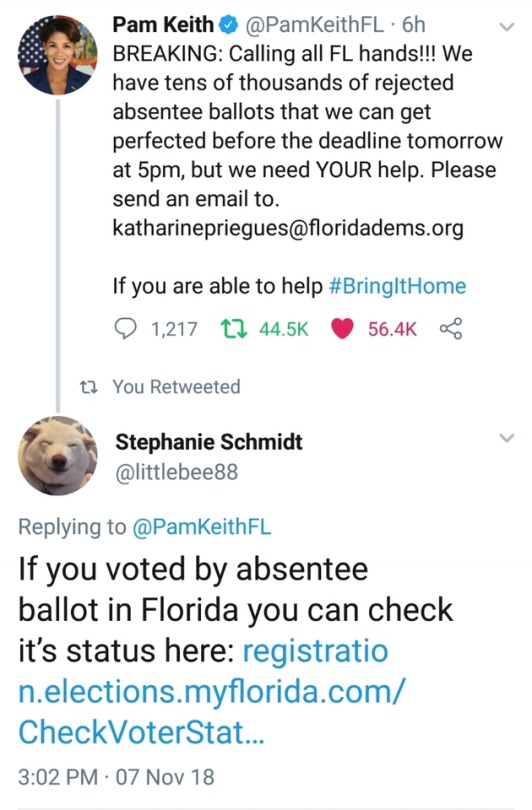
PLEASE check your ballot was counted if these apply to you, and everyone PLEASE share this information! We have til 5pm tomorrow (presumably EST), November 8, 2018!
I hadn’t seen any English reports on this but its too good not to share.
So right now there are pretty crazy right-wing nationalist sexists in Japan. They’re dressing up in WWII military outfits, they’re standing outside of Korean schools (in Japan) shouting that Koreans should be killed, and just generally being horrible human beings. For reasons unknown, the Japanese police haven’t done anything to stop them, and when people get physical with the right-wingers and a fight breaks out, it’s not the right-wing people who get punished.
Enter: the Yakuza.
Yakuza, for those who don’t know, is the name for the world of Japanese gangs, commonly known for being covered in tattoos. A few retired yakuza members (most of whom are notoriously and vocally conservative) got tired of this extreme right wing BS. They believe that picking on people who are weaker than you, like the children at the Korean schools or refugees, is embarrassing, and not something to be proud of. They want these right wingers to man up (the group is almost entirely men) and shut up.
These old retired yakuzas start showing up at the right wing protests and intimidate the hell out of these guys. When they feel like it, they’ll use physical force too. The police don’t mess with the yakuza so these right wing protesters become human punching bags. All their talk of killing Koreans or their superiority to just about everyone flies out the window when these gangsters roll up.
It started with only one or two yakuza who were bored and fed up, but more and more started to come. They started training in boxing and street fighting, and wouldn’t you know it…the number of right wing protesters got less and less.
Then, people of other walks of life joined in too. With the yakuza throwing the police off, professors could join by writing about the issues profusely. Suddenly a ton of otakus joined too, using their art and community to protest. They’d show up in droves and stand behind the muscle (yakuza) and make a ton of noise. They literally staged an “otakus against racists” rally.
Slowly, the protests have seen the right wing attendance drop more and more and I am living for these “manly men” being trashed by retired gangsters and fans of Love Live.
In conclusion:
First, I’d like the extreme right wing to gtfo
Second, I’d like a manga, then an anime, about these yakuza who befriended professors and otakus to fight neo-nazis. K? cool.
A stark new United Nations climate report warns that humans have about 12 years to slash global emissions by nearly half. Unfortunately, that’s going to be extremely challenging with deep changes to the global financial system.
Despite regularly claiming new commitments to “green finance,” the big banks continue to lend billions to the fossil fuel industry every year—including for the most extreme climate-damaging activities, like exploiting tar sands oils and burning coal.
Continuing to invest in fossil fuels goes against all of the evidence about what needs to be done to tackle climate change. An estimated 80 percent or more of the world’s known fossil fuel reserves need to remain in the ground if we’re to have any chance of avoiding catastrophic consequences, like rising sea levels and melting glaciers.
In place of fossil fuel finance, investments should be redirected toward renewable energy, cleaner industry, and more sustainable agriculture, among other priorities. That requires reforms to the Fed and the breakup of the biggest banks.
The scale of this change can seem daunting. But in a new report for the Institute for Policy Studies, I’ve identified several priorities for achieving a more climate-friendly financial system.
Reform the Fed
The financial crisis laid bare the shortcomings of a system that was obsessed with “price stability” above all other factors. Since then, many central banks have revised their mandate to include the stability of the financial system as a whole. Some central bank leaders already interpret this to include broader social and environmental objectives, and it’s time for the Fed to step up and do the same.
Increase transparency
Mark Carney, governor of the Bank of England, has repeatedly emphasized greater transparency on the potential impacts of climate change on the economy.
More frequent extreme weather events, such as Hurricane Florence or the past summer’s California wildfires, could have big impacts on property, trade and insurance premiums. Companies should be clear about how their business model would be affected by the transition to a cleaner economy. The international Financial Stability Board, established in response to the financial crisis, has suggested new global rules on climate transparency, which would be a good start.
Promote clear guidelines
In China, meanwhile, an interventionist central bank has played a key role in promoting green banking guidelines that prioritize loans for renewable energy and more efficient industry. The Fed should follow, while seeking to improve upon the patchy record of the People’s Bank of China in implementing its own policies
More radically, banks should impose a “credit ceiling” on fossil fuel investment, with a clear timeline for reducing this limit to zero. If the oil needs to stay in the ground, the money to extract it needs to stay in the vault.





 Sunshine and Shit Jokes